When Everything Is Lit, Nothing Is Lit
On lighting, optimisation, AI, and knowing when enough is enough.


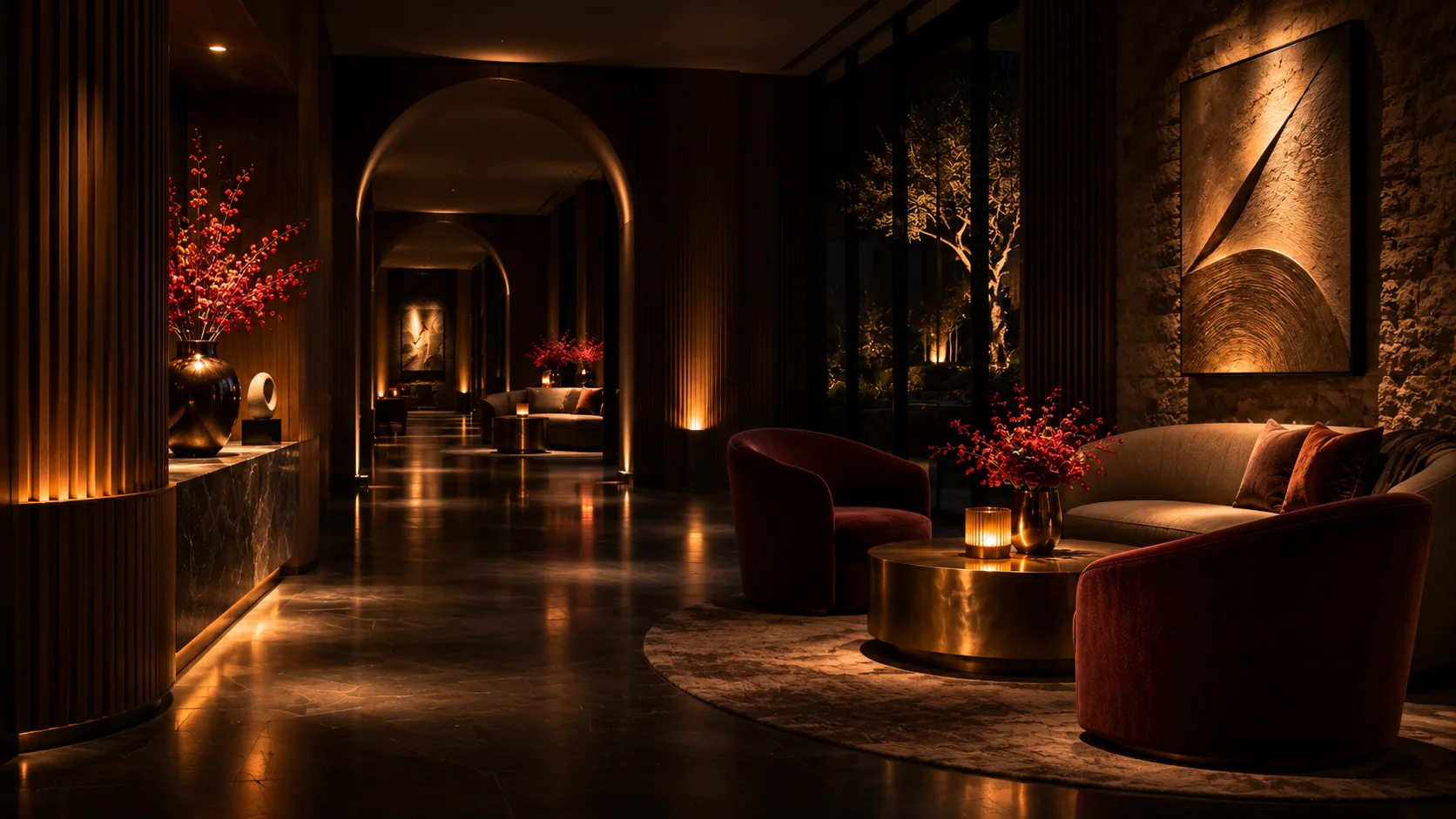
There's a temptation in architectural lighting to celebrate every detail. Every column, every textured wall, every carefully considered feature. We want to showcase the architecture, but when everything is illuminated, nothing really stands out.
Some of the best spaces are comparatively dark. A restaurant where tables become little islands of warm light. A hotel corridor with carefully placed pools of illumination. A building façade where just a handful of details emerge from the shadows. These spaces have character, depth and atmosphere because someone has made a conscious decision about what deserves attention.
Theatrical lighting designer Isabella Byrd touches on something similar in a 2024 interview with Broadway.com. Describing herself as a darkness designer, she questions the ever-increasing brightness of theatrical productions and our changing expectations of spectacle.
"Darkness activates our humanity."
— Isabella Byrd, Broadway.com, 2024

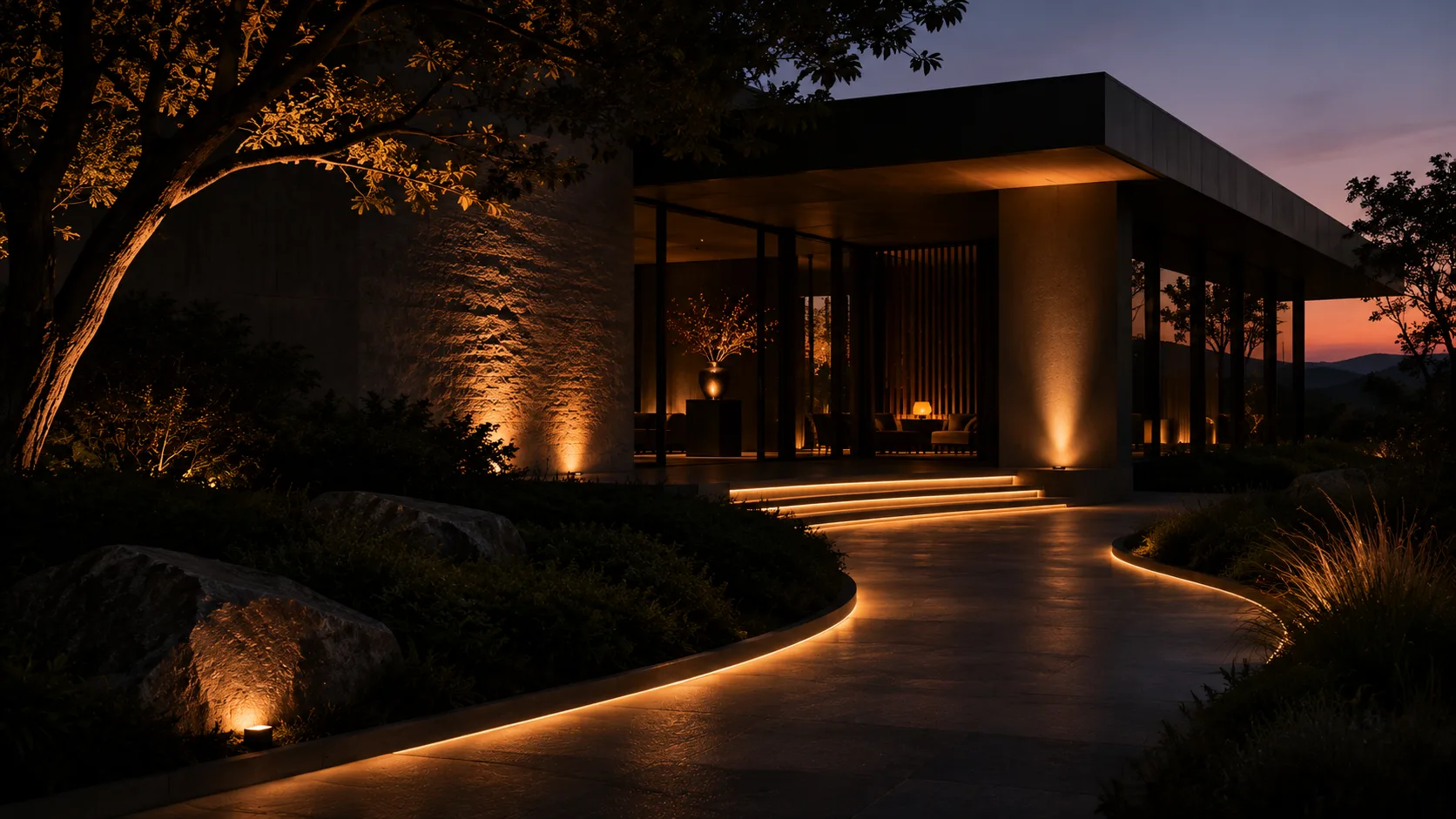
Darkness gives light its meaning. We need contrast to establish hierarchy, create drama and guide the eye. Without it, even the most elaborate lighting scheme can feel strangely flat.
In February 2026, Building Design published an article titled Architectural Lighting and Restraint: Why Less Light Can Achieve More, featuring Keith Bradshaw, CEO of Speirs Major.
The article explored how lighting designers are increasingly balancing demands for visual spectacle with concerns about energy consumption, light pollution and environmental impact. It also discussed the importance of darkness as a design tool, citing Speirs Major's work in creating environments where light is used sparingly and with intent.
"People still want great atmosphere, great image, great character, great memories."
— Keith Bradshaw, Speirs Major, Building Design, 2026
We have extraordinary technical capabilities available to us, but the underlying ambition remains much the same. We want to create spaces that people enjoy, remember and connect with.
Of course, uniformity has its place. Appropriate illumination is essential for safety, accessibility and visual tasks. But I do wonder whether our pursuit of performance figures sometimes overshadows the less tangible qualities of a space.
We can measure lux levels, uniformity ratios, efficacy and energy consumption. We can demonstrate compliance and produce increasingly sophisticated calculations.
But how do you put atmosphere into a spreadsheet?
Meanwhile, We're currently obsessed with making everything faster.
AI tools, automated workflows, productivity software. Every new development promises to save us time, eliminate friction and help us achieve more.
I'm as guilty of embracing this as anyone. I've spent countless hours experimenting with AI and developing tools to improve creative workflows. I find the technology fascinating, and I genuinely believe it has enormous potential.
But there's a question I keep coming back to.
If everything gets faster, is anything actually faster?
A task that once took eight hours might now take two. But when everyone can complete that task in two hours, that becomes the expectation. The remaining six hours quickly fill with something else.

We're producing more, working faster and continually raising the baseline, but I'm not entirely convinced we're gaining much breathing room.
AI researcher Ethan Mollick raised an interesting point in an April 2026 interview with UNLEASH, suggesting that organisations need to rethink how work operates rather than simply treating AI as another piece of productivity software.
"One of the worst mistakes you can make in a company is 'de-weirding' AI by treating it like an IT product."
— Ethan Mollick, UNLEASH, 2026
We're becoming exceptionally good at accelerating existing processes, but perhaps we should spend more time questioning whether those processes are worth accelerating in the first place.
Just as illuminating every surface removes the distinction between light and dark, optimising every process risks removing the distinction between ordinary and exceptional. What was once an impressive improvement simply becomes the new normal.
When it comes to AI-generated imagery, everything can look extraordinary if done without foresight. Overly dramatic lighting, immaculate surfaces, cinematic compositions and incredible detail. Yet sometimes the results feel strangely uninspiring because every part of the image is competing for attention.

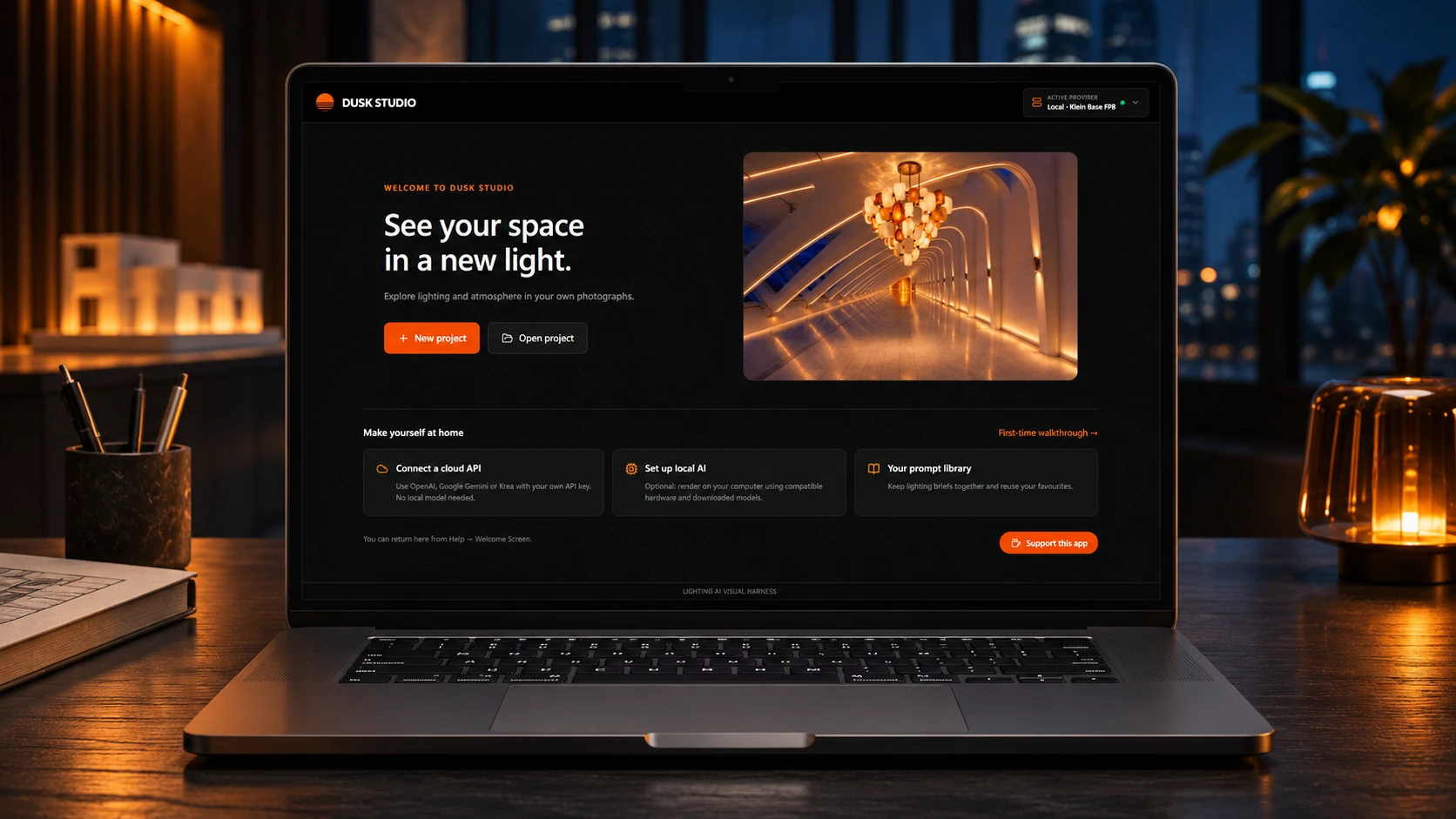
I've encountered this repeatedly while developing DUSK Studio. Getting an image model to add more light is relatively easy. Maintaining a sense of realism and atmosphere was the more challenging task. There's an almost irresistible tendency to illuminate every opportunity, even when the composition would benefit from restraint.
Interestingly, this growing fatigue with polished digital perfection is beginning to influence other creative industries.
In a March 2026 Vogue article titled The Anti-AI Slop Playbook, Agustina Panzoni, Head of Culture Strategy at Death to Stock, describes a shift towards deliberately imperfect visual language as creatives respond to the increasingly polished aesthetic of AI-generated content.
"Creatives are leaning into imperfection."
— Agustina Panzoni, Vogue, 2026
Perhaps when technical perfection becomes effortless, the little imperfections and considered decisions that reveal human involvement become more valuable.
Some of the most rewarding moments in creative work happen when things aren't particularly efficient. A sketch that doesn't go to plan. An unexpected conversation. An idea that emerges because you've spent a little longer considering something rather than immediately producing another ten variations.
I'm certainly not suggesting we abandon technology or deliberately make our lives more difficult. Quite the opposite. I love what these tools make possible, and I have no intention of stopping my exploration of them. But I do think we need to be more selective about what we choose to optimise.
In lighting design, restraint takes confidence. It's often easier to justify adding another luminaire than explaining why a particular surface should remain in shadow. Yet some of the most successful schemes are those where the designer has resisted the temptation to illuminate everything.
Perhaps the same principle applies to the way we work.
If accelerating a process gives us more time to think, explore and make better decisions, that's a meaningful improvement. If it simply allows us to squeeze more work into an already crowded day, I'm less convinced.
And if we're constantly adding more light, more technology, more output and more efficiency, perhaps we should occasionally ask ourselves what we're actually gaining.
After all, the brightest part of a room only feels bright because something around it is darker.
Maybe progress works in much the same way.
When everything is lit, nothing is lit. And when everything is optimised, perhaps we lose sight of what we were trying to improve in the first place.
References
Speirs Major / Building Design (2026)
Mary Richardson, Architectural Lighting and Restraint: Why Less Light Can Achieve More, 13 February 2026.
https://www.bdonline.co.uk/buildings-design-and-specification/architectural-lighting-and-restraint-why-less-light-can-achieve-more/5140700.article
Isabella Byrd / Broadway.com (2024)
Darryn King, Tony-Nominated Lighting Designer Isabella Byrd Is Not Afraid of the Dark, 7 June 2024.
https://www.broadway.com/buzz/204272/tony-nominated-lighting-designer-isabella-byrd-is-not-afraid-of-the-dark/
Ethan Mollick / UNLEASH (2026)
John Brazier, Ethan Mollick: If You're Not Delegating Work to AI, You're Not Experimenting Hard Enough, 27 April 2026.
https://www.unleash.ai/artificial-intelligence/interview/ethan-mollick-if-you-re-not-delegating-work-to-ai-you-re-not-experimenting-hard-enough
Agustina Panzoni / Vogue (2026)
Amy Francombe, The Anti-AI Slop Playbook, 30 March 2026.
https://www.vogue.com/article/the-anti-ai-slop-playbook