UPDATES, UPDATES
LUMVIEWER & TETHERNOTE

August was a busy month. Incredibly busy.
Between keeping our daughter entertained during the summer holidays, heatwaves, working overtime to meet project deadlines, and travelling a lot for work, I can happily say I'm glad it's September.
However, that doesn't mean I haven't found time to keep developing some of my web apps. I'm happy to announce that both LUMVIEWER and TETHERNOTE have had quite the glow ups, and are freely available to try both in desktop and mobile.

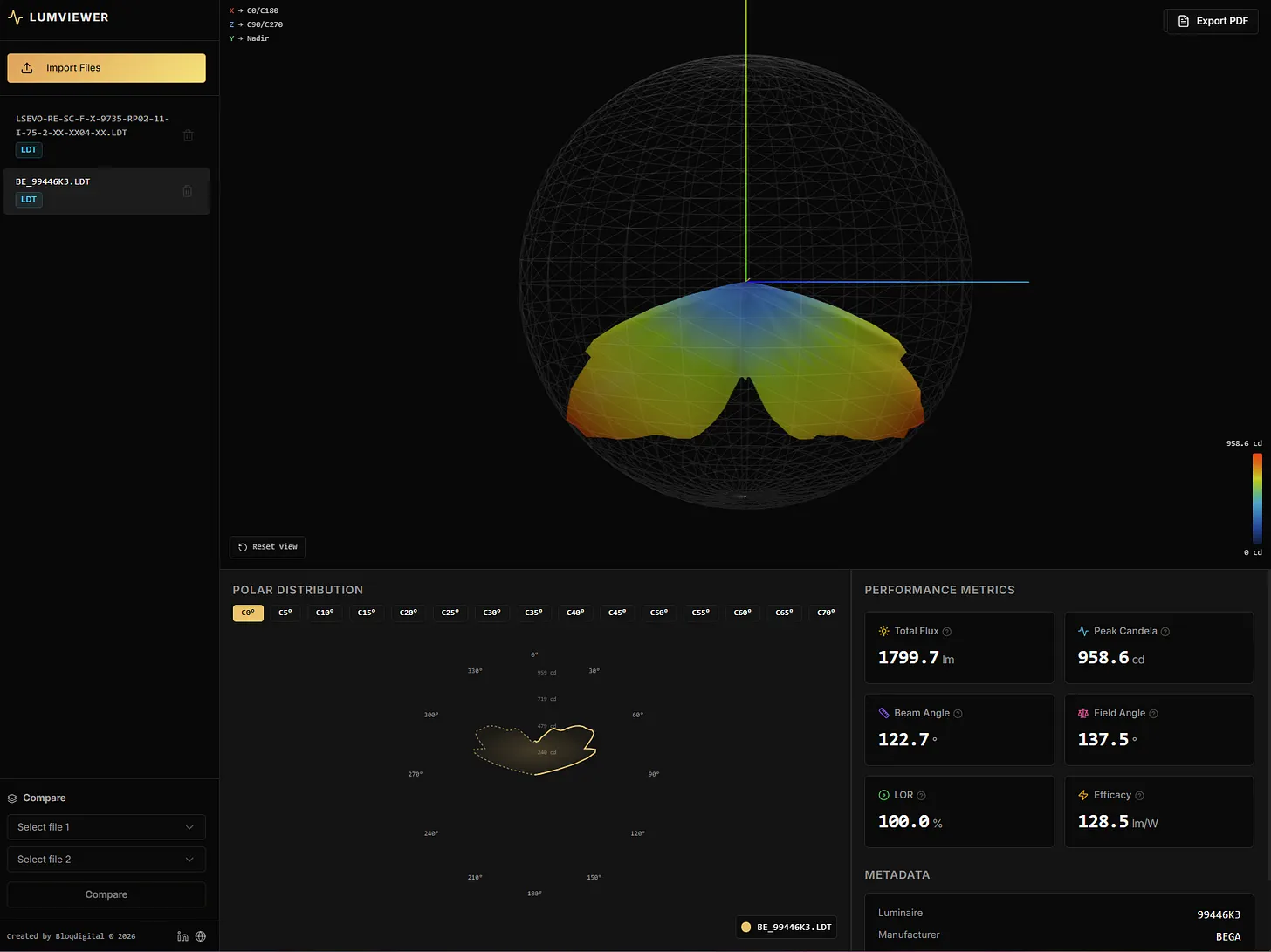
LUMVIEWER is a FREE, small, on the go local-first tool for opening, visualising and comparing professional lighting data at speed.
Professional lighting manufacturers provide digital files that describe exactly how a light fitting throws light into a space. They can tell you whether the light is concentrated into a narrow beam, spread evenly across a room, pushed more strongly in one direction, or shaped in a way that would be difficult to judge from a product photograph.
These files are incredibly useful to lighting designers and engineers.
They are also cumbersome to read without loading them into a specialist tool such as Dialux or Relux, which in itself creates a streamline barrier. Some “LDT Viewers” are available but require desktop installations, and in some cases Python environments to run them. All of this stalls the creative process.
Until now.. LUMVIEWER allows users to examine the distribution from different directions and compare several of those directions at once. Moving around the diagram in 3D reveals the exact angle, direction and candela value behind any point on the graph.
Two photometric files can also be loaded and compared directly.

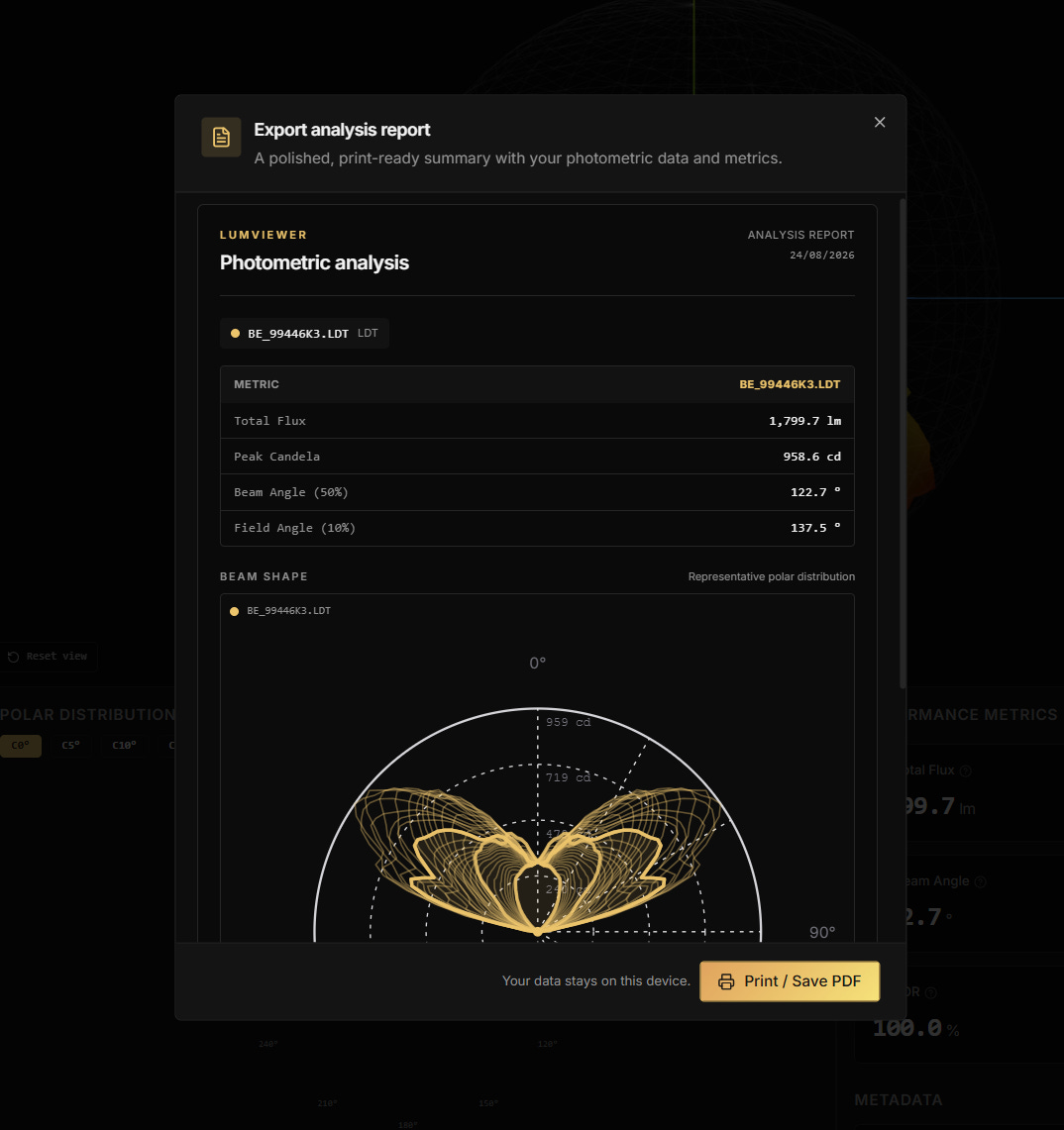
All of this info can then be printed off as PDF and saved in a clean, presentable format.
Check out the web app here - https://lumviewer.replit.app/
Meanwhile, TETHERNOTE has had a complete overhaul, especially on mobile with drawer like tools and full responsive behaviour.
Most note-taking apps start from the assumption that you already know where a thought belongs. There are folders, pages, tags, lists and databases, all of which are useful once you have some idea what you are doing. They are slightly less useful when you have a sentence, a screenshot and a half-formed thought that may or may not turn into anything.
That was the starting point for Tethernote. I kept coming back to the idea of a scrapbook… what would happen if notes could simply sit beside one another for a while without immediately being filed, categorised or turned into a document. Tethernote grew out of that idea: an infinite canvas for arranging and connecting notes, images and video references in the same visual space.
Check it out here - https://tethernote.replit.app/